X-Rays and post-ex with Cumbria University
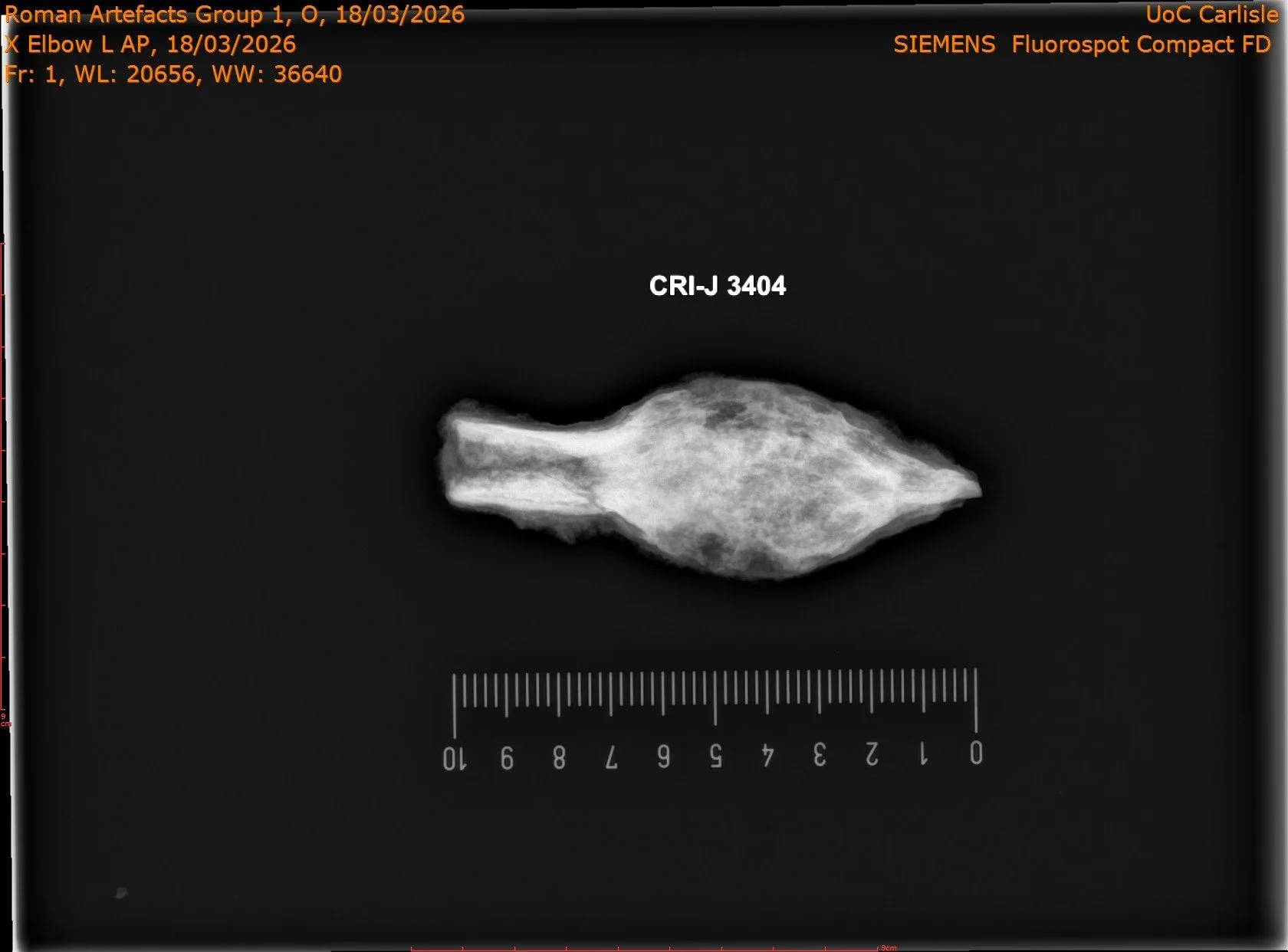
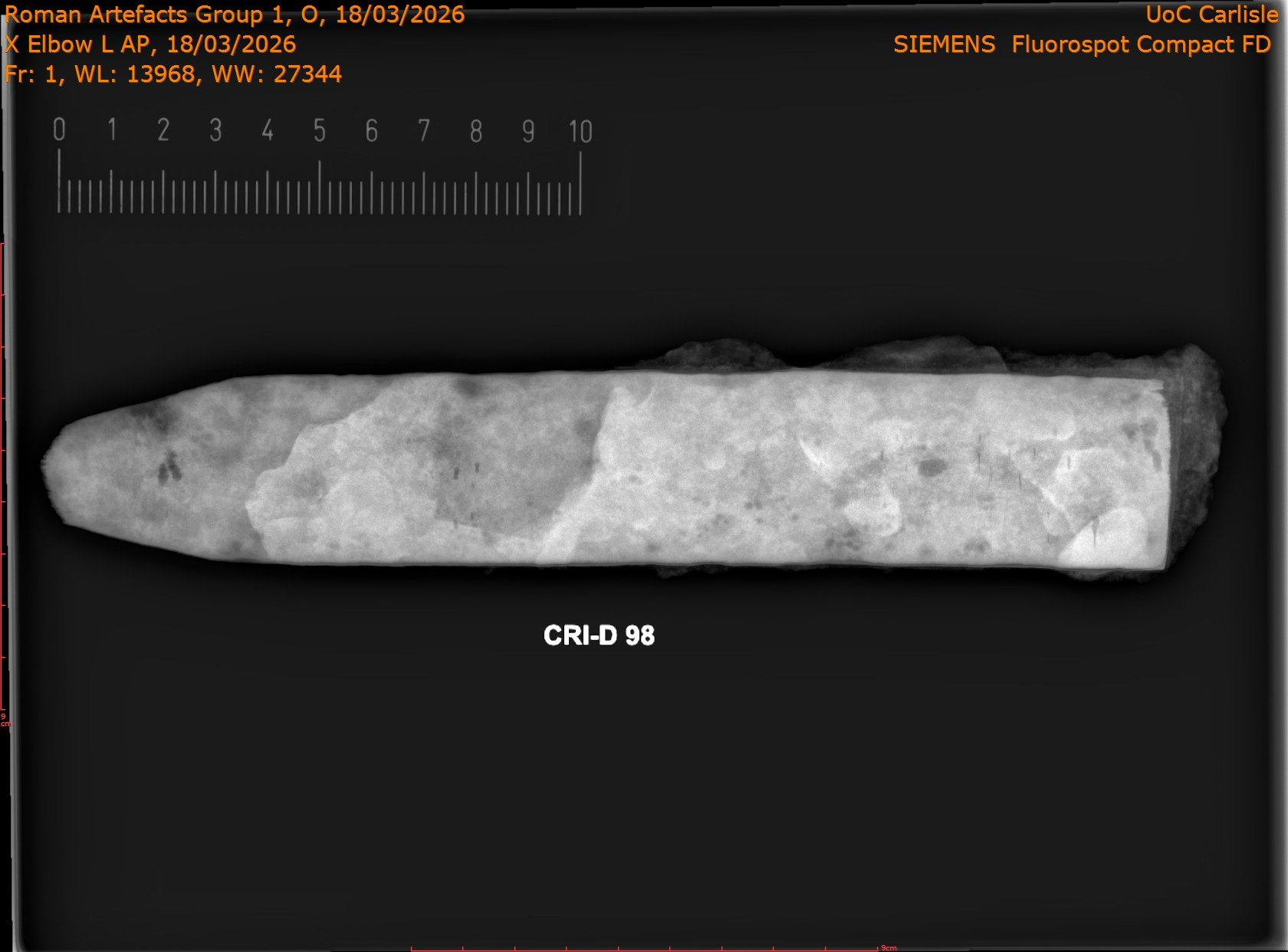
After the end of every dig, the work doesn’t stop. Having excavated the objects and recorded the site we then need to conserve and to learn everything we can about them. This is called post excavation or post-ex. This means when the digging (the fieldwork) finishes you next carry on with the cleaning, cataloging, analysing, and then interpreting of what you have uncovered to reconstruct the history of the site and prepare what you have discovered for public and academic publication.
Because excavation is inherently destructive, post-ex is what preserved the site in perpetuity. We have also a moral obligation to look after what it is you take out the ground. With URC the reports written such as those for the beads, or the glass, or the Imperial Tiles, the intaglios and other objects from the site - eventually will be compiled and the story of the site will be published.
To help with all this Cumbria University and the brilliant team and students at the Institute of Health at Cumbria University have offered to help us x-ray artefacts from the Roman Imperial site at Carlisle Cricket Club.
Uncovering Roman Carlisle as a charity and a community archaeological project find that these kinds of collaborations mean a great deal and provide opportunities not only for greater understanding of our shared heritage, pulling together experts across disciplines, but also build important partnerships and opportunities for shared learning.
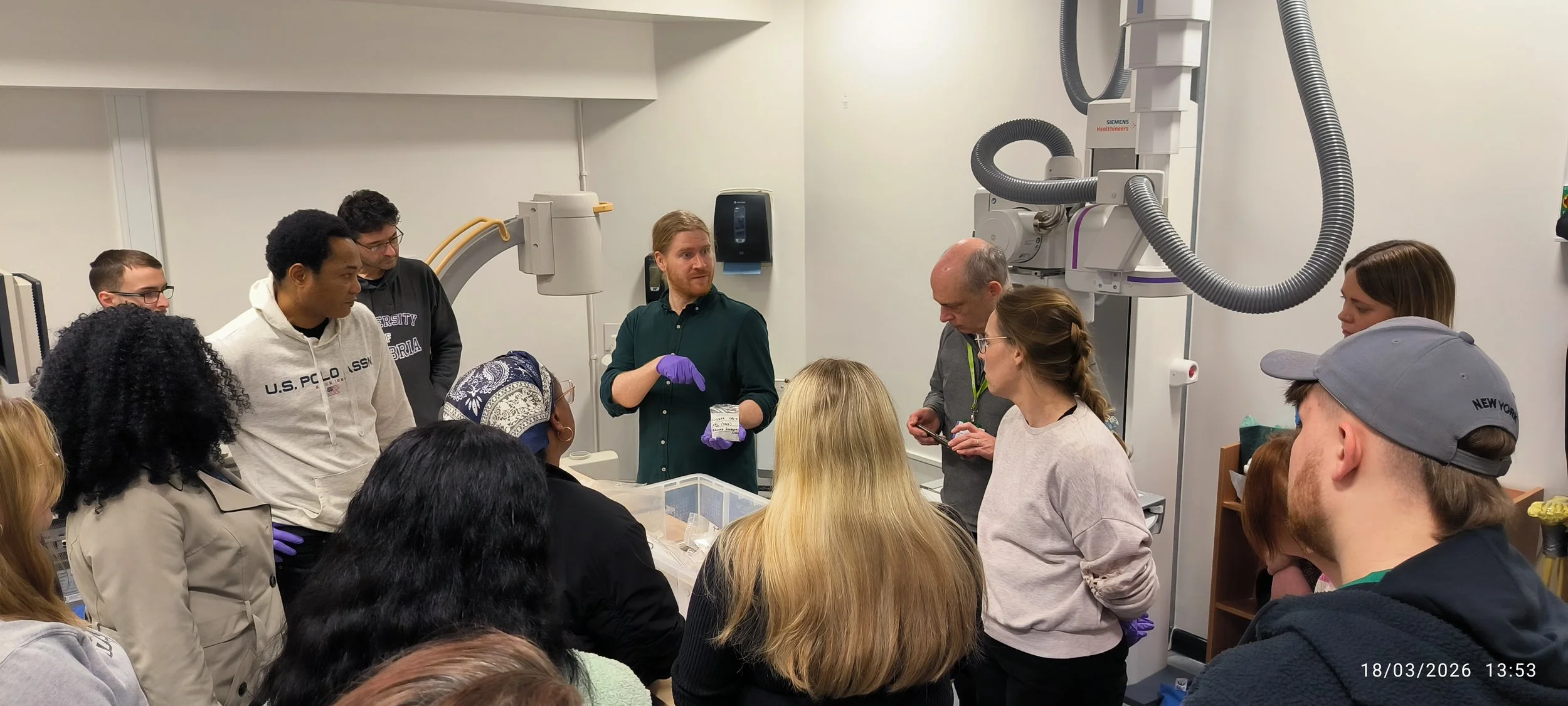
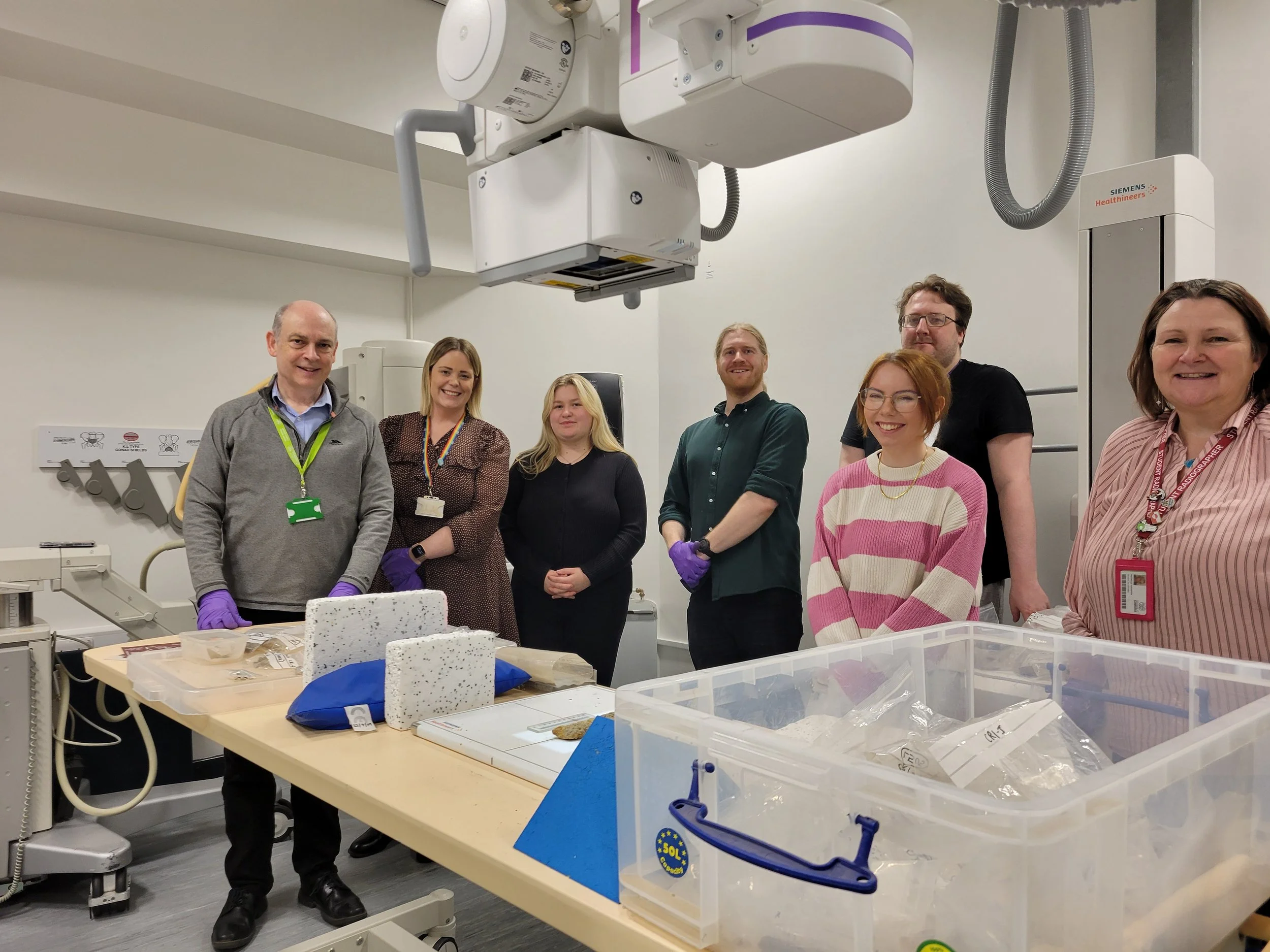
Back in April of 2026 Dr Ian MacDonald welcomed us to the University for a session. We began with a short introduction for the students to the Uncovering Roman Carlisle community archaeology project and the types of artefacts that have been discovered, general talk on conservation, and the significance of the site. After this initial introduction we headed to the lab, where the groups were divided into two and we took turns examining the artefacts which could potentially hold clues to the Roman past.
The session was exciting, with Dr Ian MacDonald and Kimberly Bradshaw’s expertise guiding the group. The students came from a range of backgrounds and experience and worked very well together and professionally. Through their efforts and expertise, we had the opportunity to peer through millenia of concretions and corrosion on the artefacts, which had hidden them.
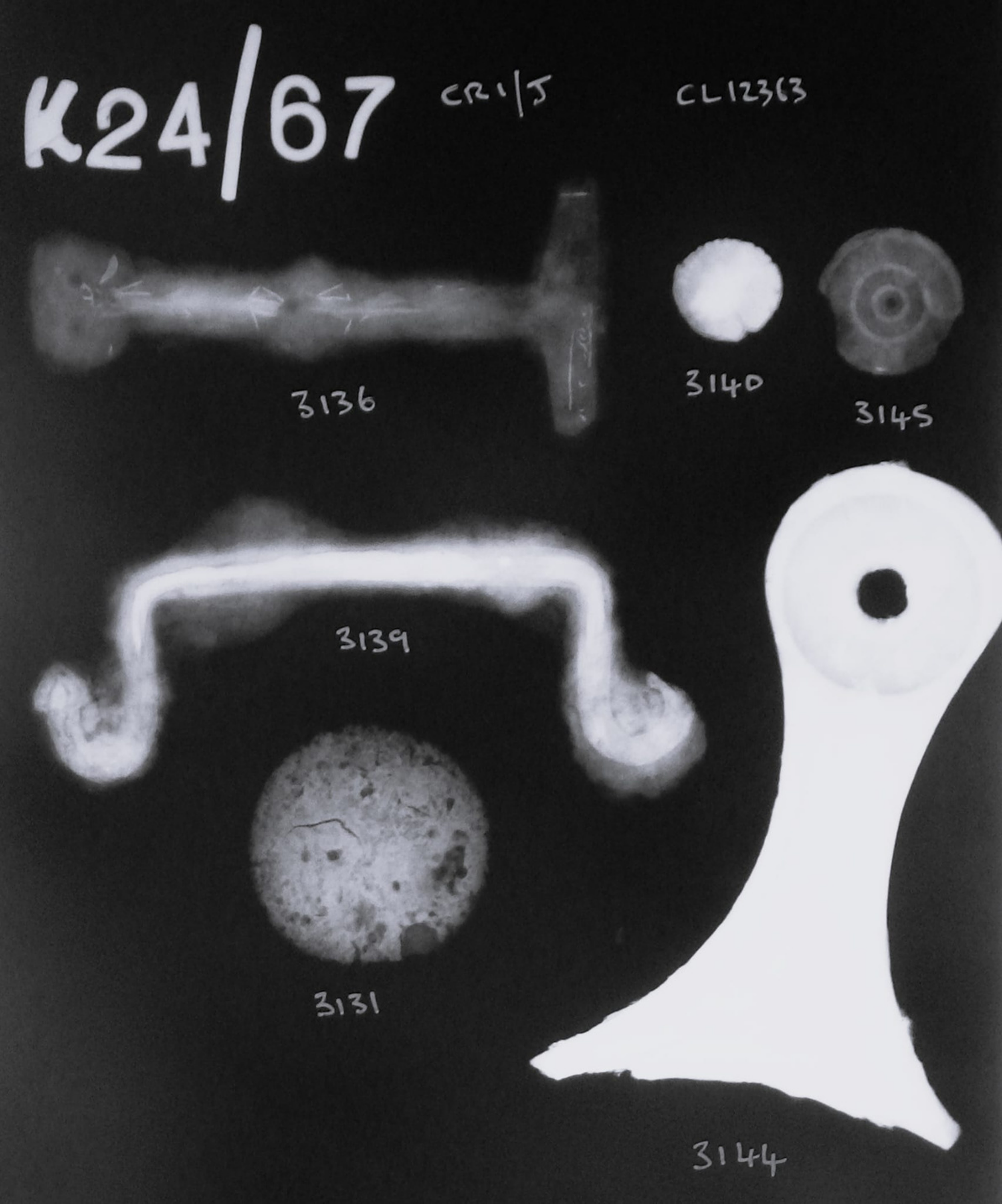
All of the objects we looked at were predominantly iron or copper alloys. Overtime in the ground these develop a hard compact mass around them, called a concretion, made from corrosion or minerals which obscured what was beneath. The ability to x-ray these objects are so valuable as a means to understand the conservation needs of the objects, as well as to keep a record of the objects themselves. Previous work with the Institute identified, for example, a very fine handle for a Roman soldier's dagger called a Pugio - this one having silver inlay - all initially invisible to the human eye.
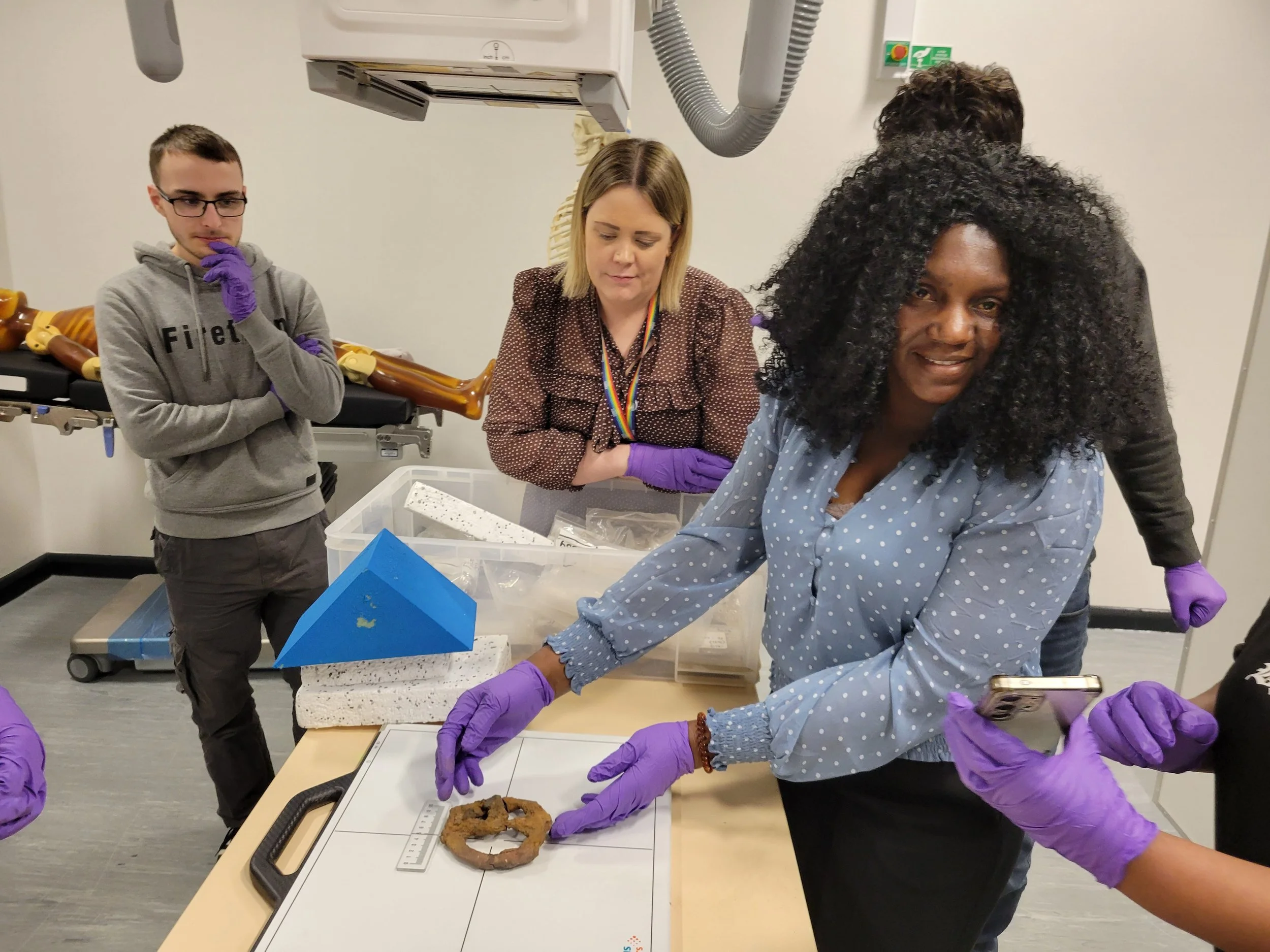
The students took it in turns to handle the ancient artifacts and select potentially promising ones to x-ray. Working with Ian and Kimberly, they then considered how best to compensate for things like the degree of corrosion, penetration of the scan and orientation of the object, the size, shape, and conditions of the artefacts.
From these x-rays, the students uncovered very valuable information about the objects. Looking for things like;
Internal structure and shape of the artefacts
Hidden decoration and inlays, or rivets
If we could see evidence of mechanisms (like what you may find in say a lock)
What could be learned to help or further conservation treatment needs
Was there even an embedded artefact hidden in the lumps of concretions
Through their efforts we were able to identify a variety of Roman artefacts, and some mystery items needing further explorations. We saw emerging from the x-rays, a brilliant example of a utility knife, other parts of sword blades, knives, spear points, and spear butt-spikes/ferrules (the metal bottom of a spear), lynch pins, and nails. Excitingly among the x-rays appears to be the remains of an iron strigil - a type of tool used in a Roman bathhouse to scrape sweat, mud, and oils off the body.
There was also further fascinating but as yet unidentified finds. Time will tell what these are.
From URC we would like to thank Dr Ian MacDonald, Kimberly Bradshaw, and the techies, along with the students and University of Cumbria.
The session was fascinating and a very enjoyable afternoon working with the staff and students and has opened up a very valuable partnership which the Uncovering Roman Carlisle CIO is looking forward to developing in future with the University of Cumbria, and team and students at the Medical Institute.
As always the work is ongoing, and for every £1 we put in the ground, the same goes towards the post-ex, and so partnerships like this especially showcase what a great community there is here in Carlisle.